Fixed ladder SL for safe and stable access to elevated areas
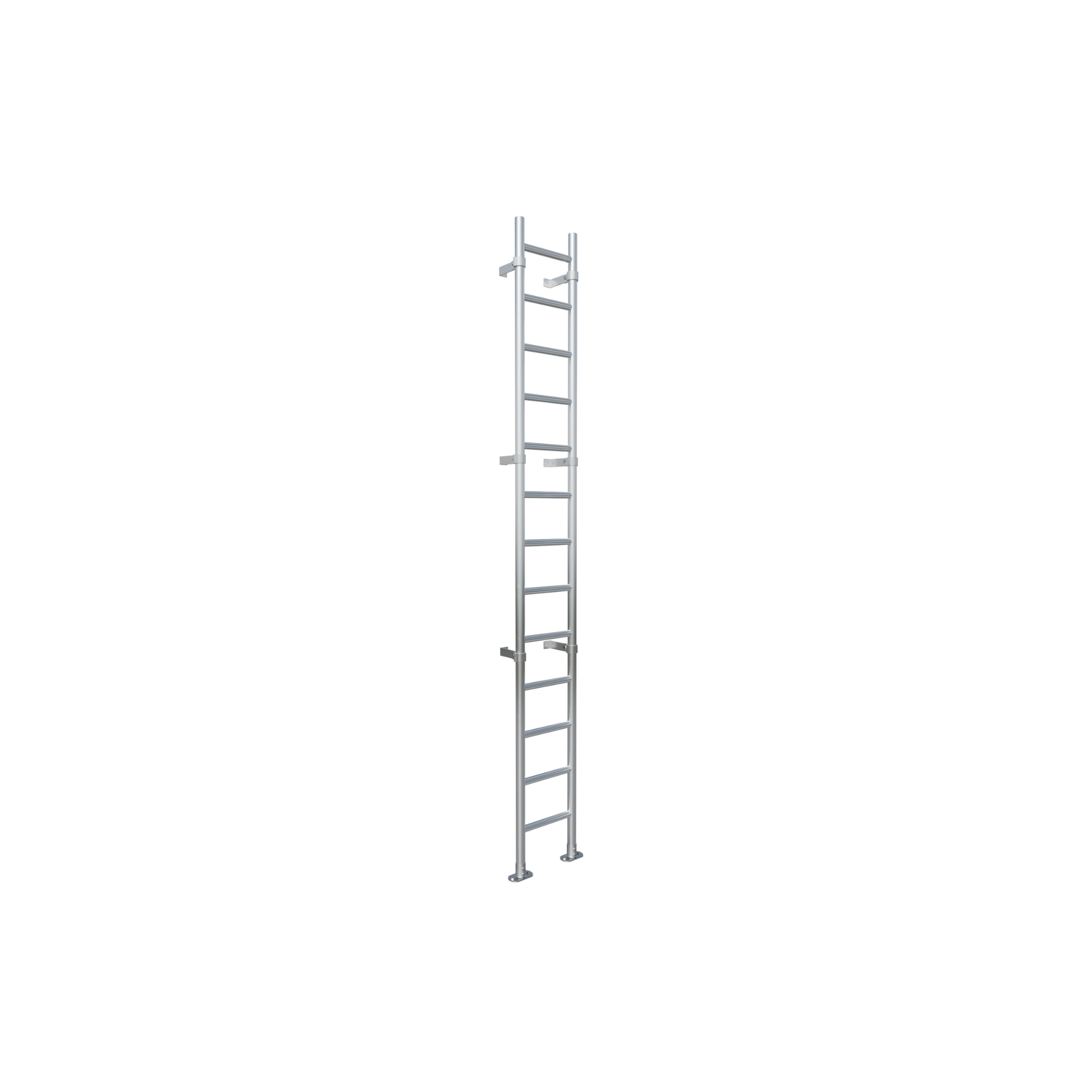
The SL fixed ladder is designed to provide safe vertical access to roofs, plant rooms, machinery spaces and other elevated areas. Manufactured in aluminium and equipped with anti-slip SafeGrip rungs, it ensures stable and secure use for service, inspection and maintenance.
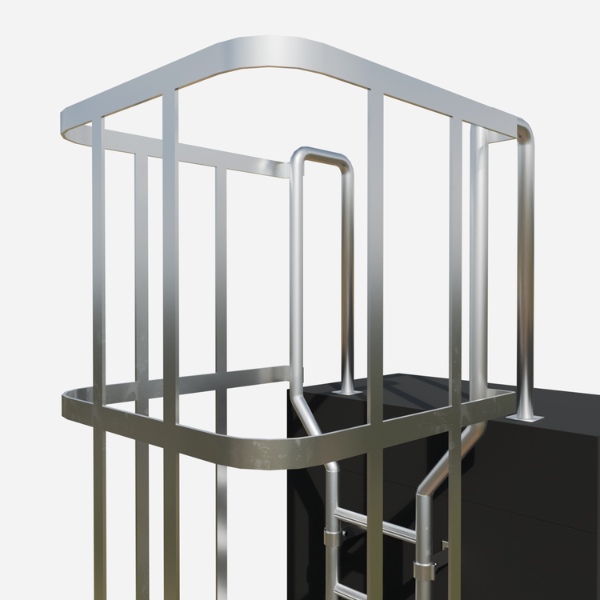
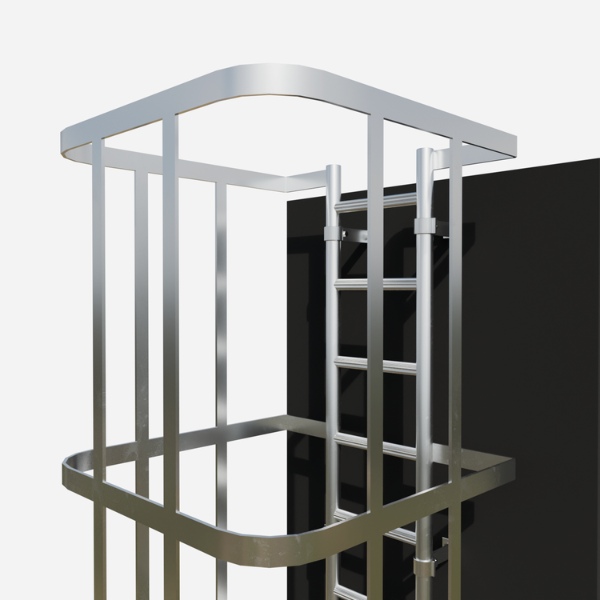
The ladder is designed in accordance with the British Standard BS 4211:2005 and meets relevant requirements for fixed access ladders. It can be installed both indoors and outdoors on façades, industrial buildings and technical enclosures. For installations above 2.5 metres, the ladder can be equipped with a safety cage for enhanced protection.
The SL ladder can be customised to suit specific project requirements and is available with a range of optional features, including platforms, safety systems and powder coating in any RAL colour to match the building’s architecture. The robust construction is engineered for high loads and long service life, even in demanding environments.
With a strong focus on safety, durability and flexibility, the SL ladder is a reliable solution for permanent access to height in industrial, commercial and public buildings.
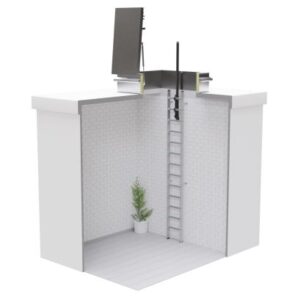
The SL ladder is commonly used in combination with our roof hatches.
Model: SL Fixed Ladder
Applications: The SL fixed ladder is used where safe vertical access is required in buildings and technical installations. It can be installed both indoors and outdoors and is adaptable to building height and project-specific requirements.
Typical applications:
- Roof access for service and maintenance
- Plant rooms and service shafts
- Industrial buildings and warehouses
- Ventilation and machinery spaces
- Commercial and public buildings
- Technical installations on façades
Material: Aluminium (standard)
Also available in galvanised steel
Construction:
- Side profiles: 48.3 mm (size 8 structural tube)
- Distance between side profiles: 400 mm
- Rungs: SafeGrip anti-slip rungs
- Rung spacing: 250 mm
Load capacity:
- Maximum load: 200 kg per rung
- Total load: 500 kg/m²
Safety cage:
- Recommended for ladders above 2.5 m
- Cage rings: 50 × 5 mm flat steel
- Maximum 900 mm between rings
- Cage starts approx. 2.4–2.5 m above ground level
Safety cage (for high-level installations)
Platforms
Retractable handhold
Safety closure or lockable access
Protection against unauthorised access
Powder coating in any RAL colour
The ladder can also be supplied in various lengths and customised to meet specific project height requirements.
The SL ladder is designed in accordance with BS 4211:2005 – Permanently fixed ladders for access.
It complies with relevant building requirements for fixed vertical ladders in industrial and commercial environments.
The ladder is manufactured in project-specific lengths.
Standard dimensions:
- Distance between side profiles: 400 mm
- Rung spacing: 250 mm
- Safety cage start: approx. 2.4–2.5 m above ground level
- Maximum distance between cage rings: 900 mm
Exact dimensions are customised to suit the installation and building height.
Always read the installation instructions supplied with your order carefully before starting installation, as these may vary depending on configuration and selected options.
To ensure correct function and safe installation, the work should be carried out by a qualified installer. Fixings and fasteners must be adapted to the specific substrate.
The ladder is typically installed:
- On façades
- On steel structures
- On concrete structures
- On technical enclosures or service shafts
Always follow the specific operation and maintenance instructions supplied with your order. These may vary depending on model, material and selected options. Fixed ladders require minimal maintenance but should be inspected regularly.
Recommended maintenance:
- Visual inspection of fixings
- Inspection of rungs and side profiles
- Inspection of safety cage and safety components
- Cleaning when required
For outdoor installations, regular inspection is recommended to ensure long service life.
When is a fixed ladder used?
A fixed ladder is used when permanent vertical access is required, for example to roofs, plant rooms, ventilation systems or machinery spaces.
They are commonly used in industrial buildings, commercial properties and technical enclosures where regular service and maintenance are needed.
What is the difference between a fixed ladder and a portable ladder?
A fixed ladder is permanently installed on a building and provides safe, regular access to elevated areas.
A portable ladder is movable and typically used temporarily for lighter or occasional work.
When is a safety cage required on a ladder?
A safety cage is generally recommended for ladders above approximately 2.5 metres. It reduces the risk of falls and is commonly used in industrial environments or where safety regulations require additional protection.
Can fixed ladders be used both indoors and outdoors?
Yes, fixed ladders can be installed both indoors and outdoors. For outdoor installations, materials such as aluminium or galvanised steel are typically used to ensure resistance to weather and corrosion.
Can a fixed ladder be secured to prevent unauthorised access?
Yes, many fixed ladders can be equipped with safety features such as lockable guards, ladder protection systems or safety gates to prevent unauthorised access to roofs or technical installations.
Do fixed ladders require maintenance?
Fixed ladders generally require minimal maintenance, but regular inspections are recommended. Fixings, rungs and safety components should be checked to ensure the structure remains safe and stable.
Can a fixed ladder be customised?
Yes, fixed ladders are typically manufactured in custom lengths and configurations to suit the height of the building and specific installation requirements.
They can also be equipped with safety cages, platforms and different mounting options.
What material is best for fixed ladders?
Aluminium is commonly used because it is lightweight, strong and corrosion-resistant.
In certain environments, galvanised steel or stainless steel may be preferred depending on load requirements and exposure conditions.